

Look, I’ve done the whole “cheap Airbnb on the outskirts” thing in France more times than I care to admit. And honestly ? It gets old. Fast. You’re wrestling with public transport schedules, missing that golden hour light on cobblestones, and basically spending half your trip just getting to the bits you actually wanted to see.
That’s why I’m now pretty obsessed with staying dead-centre in French towns. Not just “near the centre” – I mean proper, walk-out-your-door-and-you’re-there central. And yeah, sometimes that means a boutique hotel instead of a budget chain. But hear me out, because the difference is massive. Take somewhere like Annecy, for instance – staying central there completely transforms the experience, and if you’re curious about options, somewhere like hotelcentralannecy.com shows exactly what I mean by “location changes everything.”
So here are ten French towns where splashing out on a central hotel isn’t just nice – it’s genuinely the move that makes or breaks your trip.
1. Annecy – Because Those Canals Don’t Photograph Themselves at Dawn
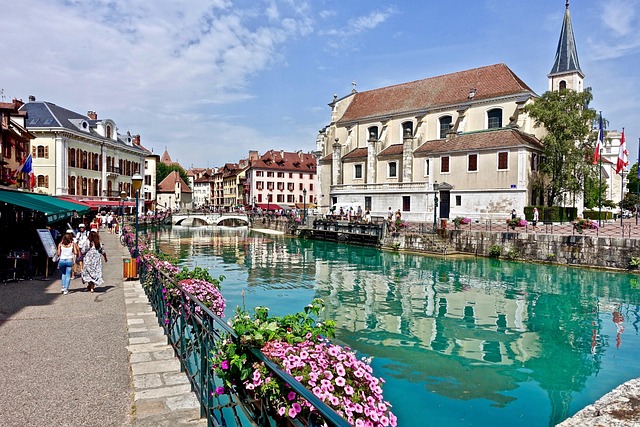 Annecy is ridiculously pretty. Like, almost offensively so. The old town sits right on Lac Annecy with these pastel-coloured houses lining medieval canals, and it’s the kind of place where you need to be out early.
Why stay central ? Because the magic happens before 8am, when the light hits the Palais de l’Isle and the tourists haven’t arrived yet. If you’re staying 20 minutes away, you’ll talk yourself out of it. You’ll hit snooze. But if you’re literally in the old town ? You just stumble out in your pyjamas (almost) and it’s right there.
Plus, the Saturday market on Rue Sainte-Claire is absolute chaos – in the best way – and you want to be able to dump your cheese haul back at the hotel before it melts.
2. Colmar – Half-Timbered Houses and Zero Regrets
Colmar looks like someone built a town specifically for Instagram, except it’s been there since the 9th century. The Petite Venise quarter is absurdly charming, and honestly, staying outside the centre here would be criminal.
The old town is compact but dense with stuff to see. Maison Pfister, the Unterlinden Museum, about seventeen wine bars you’ll want to try… If you’re based centrally, you can pop back to your room between activities. Not central ? You’re committed to a full day out, which sounds fine until you’ve been walking on cobblestones for six hours straight.
Also – and this matters – Colmar shuts down early. Like, properly early. A central hotel means you can still wander the lit-up streets after dinner without worrying about the last tram.
3. Strasbourg – European Parliament by Day, Wine Stubs by Night
Strasbourg is fascinating because it’s this weird, wonderful mix of French and German culture, and the centre – particularly La Petite France – is where that really comes alive.
Staying central here isn’t just about convenience. It’s about being able to experience the shift from day to night. The cathedral square at dusk ? Completely different vibe from midday. And those traditional winstubs (Alsatian taverns) scattered through the old town ? You want to be able to try the local Riesling without calculating taxi costs in your head.
Plus, frankly, Strasbourg’s tram system is great, but do you really want to figure it out after a few glasses of Gewürztraminer ? Didn’t think so.
4. Lyon – Because Food is the Entire Point
Lyon takes food seriously. Not Paris-serious, where it’s all about Michelin stars and intimidation – Lyon-serious, where it’s about bouchons (traditional bistros) and knowing which ones the locals actually eat at.
Vieux Lyon (the old town) is a UNESCO site crammed with Renaissance buildings and traboules (hidden passageways). But honestly ? The real reason to stay central is the food crawl potential. You want to try quenelles at one place, andouillette at another, then stumble to a third for tarte aux pralines.
Can’t do that if you’re staying in Part-Dieu and need to Uber back. Just… trust me. Central Lyon hotel = food coma in walking distance of your bed. It’s essential.
5. Bordeaux – Wine, Obviously, But Also Architecture
Bordeaux has had this massive glow-up over the last couple decades. The riverfront is stunning now, Place de la Bourse with its mirror effect is genuinely spectacular, and the whole city centre is walkable.
But here’s the thing : Bordeaux is also your base for wine country. Which means you’ll probably do a day trip to Saint-Émilion or Médoc. And after tasting wine all day, the last thing you want is a complicated journey back to some suburb.
A central hotel means you can collapse after your wine tour, then rally for dinner at Le Petit Commerce (if you can get in) without it being a whole production.
6. Aix-en-Provence – Markets, Fountains, and That Southern French Light
Aix is elegant. Like, proper elegant. Tree-lined boulevards, historic fountains everywhere, and a relaxed Provençal pace that makes you want to sit at cafés for hours.
The thing about Aix is the markets. Tuesday, Thursday, and Saturday, the old town fills with market stalls – proper ones, not tourist tat. Fresh produce, cheese, lavender, olives, the works. If you’re staying central, you can actually shop there. Buy stuff. Use your hotel as a base.
Also, Cours Mirabeau (the main drag) is best experienced at different times of day. Morning coffee, afternoon apéro, evening stroll – you want to be able to do all of it without planning military-level logistics.
7. Avignon – Papal History Meets Festival Energy
Avignon is dominated by the Palais des Papes, this absolutely massive papal palace that’s genuinely impressive. The old town is walled, compact, and full of medieval streets that seem designed to get lost in.
If you’re there during the festival (July), staying central is non-negotiable. The whole city transforms into this performance art chaos, and you want to be in the middle of it. Even outside festival season, though, Avignon’s a city that rewards just wandering – which you’ll do more of if you’re not thinking about the bus schedule.
Plus, the Pont d’Avignon (yes, that bridge from the song) is walking distance from the centre. Do it at sunset. You’re welcome.
8. Nice – Promenade, Old Town, and Actually Decent Weather
Nice is the big one on this list – definitely more city than town. But the Vieux Nice area (old town) is where the magic happens, and it’s shockingly compact for such a major destination.
Central Nice means you can hit the beach, explore the maze of old town streets, and still pop up to Castle Hill for sunset without it taking all day. The Cours Saleya market is brilliant – flowers, produce, antiques depending on the day – but only if you can actually carry stuff back without a trek.
And honestly ? Nice is expensive regardless. You might as well spend the money on location rather than settling for somewhere half-decent that’s miles out.
9. Dijon – Underrated and Absolutely Worth It
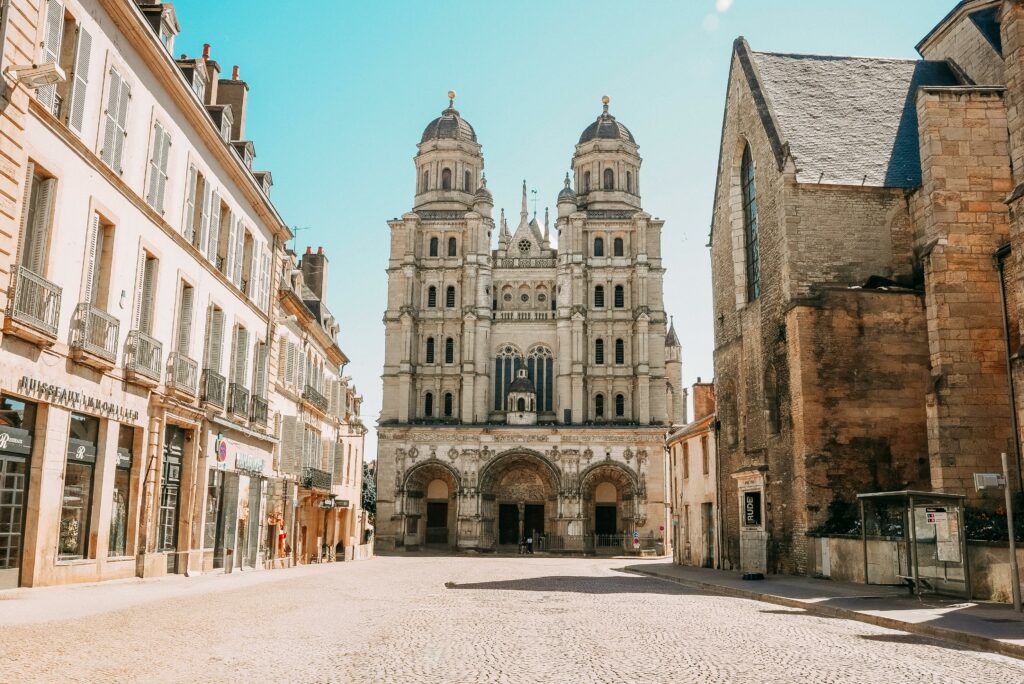 People sleep on Dijon. Literally – they stay in Paris or Lyon and skip it entirely. Big mistake. Dijon’s old town is gorgeous, packed with medieval and Renaissance buildings, and it’s way less touristy than other French destinations.
The Ducal Palace is impressive, the food scene is excellent (it’s Burgundy, of course it is), and there’s this whole owl trail thing where you follow brass owls embedded in the pavement around the historic centre. Sounds gimmicky, is actually fun.
Stay central and you’re walking distance from everything that matters. Plus, Dijon’s small enough that “central” doesn’t mean tiny rooms at inflated prices – you can actually find decent boutique hotels without selling a kidney.
10. La Rochelle – Atlantic Coast Charm Without the Brittany Crowds
La Rochelle is this beautiful port city on the Atlantic coast, with a historic harbour framed by medieval towers and an old town full of arcaded streets.
Central here means being near the Vieux Port, which is essentially the heart of everything. The towers (Tour de la Chaîne, Tour Saint-Nicolas) are right there, the old town’s a minute away, and the fish restaurants lining the harbour are where you actually want to eat.
La Rochelle also works as a base for Île de Ré, which you can reach by bridge. But after a day cycling around the island, you want a central hotel to come back to, not some business park Ibis off the motorway.
Why Central Actually Matters (Beyond Just Convenience)
Look, I get it – central hotels cost more. Sometimes significantly more. But here’s what I’ve learned : you don’t remember the money you saved staying 30 minutes out. You remember the morning you grabbed coffee and croissants from the bakery downstairs, then spent two hours photographing empty streets before anyone else was awake.
You remember spontaneous decisions – popping back for a quick rest, grabbing a forgotten charger, changing for dinner without it being a whole thing. You remember the atmosphere of a place at night, after day-trippers have left.
French towns, especially, have this quality where the experience is about rhythm and immersion, not ticking off monuments. And that only works if you’re actually in the place, not visiting it on day release from the outskirts.
So yeah. Central hotels. They’re not always essential, but in these ten towns ? They’re absolutely the difference between a good trip and one you’ll actually remember properly. Maybe that’s worth the extra euros. Maybe it’s not. But at least now you know what you’re choosing between.